


If you’ve spent more than five minutes around cannabis lately, you’ve probably heard someone talking about terpenes.
Sometimes it’s a budtender explaining why one strain smells like fresh oranges and another smells like a pine forest after a rainstorm.
Sometimes it’s a grower nerding out over a new harvest.
Sometimes it’s that one friend who just learned what terpenes are and now won’t stop talking about them.
The funny thing is terpenes aren’t unique to cannabis at all.
They’re found throughout nature.
They give lemons their bright citrus aroma.
They make the lavender smell calming.
They create the aroma of pine needles, fresh basil, black pepper, hops, mangoes, and hundreds of other plants we interact with every day.
Cannabis just happens to be one of the richest sources of them.
One of our favorite ways to explain cannabis is to think about it like a car.
THC is the engine. It’s what gets the car moving.
Nobody has ever looked at a car and said the size of the engine is the only thing that matters.
The steering wheel determines where you’re going.
The suspension changes how the ride handles.
The transmission affects how power gets delivered.
Cannabis works the same way
Cannabinoids and terpenes help shape, steer, and refine the experience. They influence the flavor, aroma, and overall character of a product in ways THC simply can’t do on its own.
That’s why experienced customers often care far more about the terpene profile than the THC percentage. The difference between a great experience and a forgettable one usually isn’t 24% THC versus 30% THC. It’s the combination of cannabinoids and terpenes working together to create something unique.
In fact, we’d argue terpenes often matter ten times more than THC percentage when it comes to how much you enjoy a product. That’s why two strains with identical THC numbers can smell completely different, taste completely different, and leave you are reaching for one again and again while forgetting the other ever existed.

The 9 Terpenes You’ll Most Commonly Find in New York and Connecticut Cannabis
As the North East cannabis market continues to mature, certain terpene profiles consistently show up across the strains consumers love most.
Myrcene
Earthy. Herbal. Slightly musky.
Found in mangoes, thyme, and many classic cannabis cultivars, this terpene is most known as the couch-lock terpene and is most commonly found in indica strains. This is the go to for deep-relaxation from the body to the mind.
Limonene
Bright. Citrusy. Fresh.
Found naturally in lemons, limes, oranges, and grapefruit. This terpene is what gives Phil’s Nice gummies their naturally uplifting effect. Have you ever smelled fresh lemons and felt the world get a little lighter? This same terpene is found in cannabis and gives the plant its citrusy smell and uplifting impact.
Caryophyllene
Peppery. Spicy. Warm.
Found in black pepper, cloves, and cinnamon. Most people don’t know this but this is the only terpene to bind to your cb2 receptors and can help bring you back down to earth if you ever get that “I am too stoned” feeling.
Pinene
Fresh pine. Forest air. Rosemary.
One of the easiest terpenes to identify by smell alone. This terpene is uplifting and energizing.
Linalool
Floral and lavender forward.
Often associated with some of the most aromatic flower on the shelf. Strains like lilac diesel boast heavy amounts of linalool leading to their relaxing effects. This terpene is close to terpene but more functional and often found in hybrid strains.
Humulene
Earthy with subtle woody notes.
Also found in hops, making it a familiar aroma for beer lovers. Think of humulene as the friend who isn’t the loudest person at the party but somehow helps make the party better. It’s earthy, woody, found naturally in hops, and frequently appears in terpene profiles that consumers describe as uplifting, social, and perfect for passing around with good company and bad jokes.
Terpinolene
Complex and energetic.
A mix of citrus, pine, herbs, and floral notes all rolled into one. If limonene is the life of the party and myrcene is the couch, terpinolene is the friend convincing everyone to stay out for one more adventure. It’s commonly found in strains that consumers describe as energetic, creative, chatty, and perfect for good conversations that somehow last three hours longer than planned.
Ocimene
Sweet and herbal.
Often compared to fresh herbs and tropical fruit. Many consumers gravitate toward ocimene-rich cultivars when anxiety starts creeping in and they’re looking for something that seems a little lighter, a slightly brighter, and a little more social. Think less staring at your inbox and more smiling with friends on a patio somewhere.
Bisabolol
Delicate floral notes.
Also found in chamomile.
Why Terpenes Matter
For years people were taught to shop cannabis by Indica versus Sativa.
The reality is a lot more interesting.
The aroma, flavor, and overall experience consumers connect with often comes from terpene profiles working alongside cannabinoids. That’s why two products with similar THC percentages can feel completely different.
It’s also why experienced shoppers often start with the nose before they ever look at THC.
If it smells incredible, that’s usually a good sign.
Why Phil’s Nice Brands Pays Attention to Terpenes
At Phil’s Nice, we’ve always believed ingredients matter.
That’s why we use real tea. Real fruit. Real wildflower honey.
It’s also why we pay attention to terpene profiles.
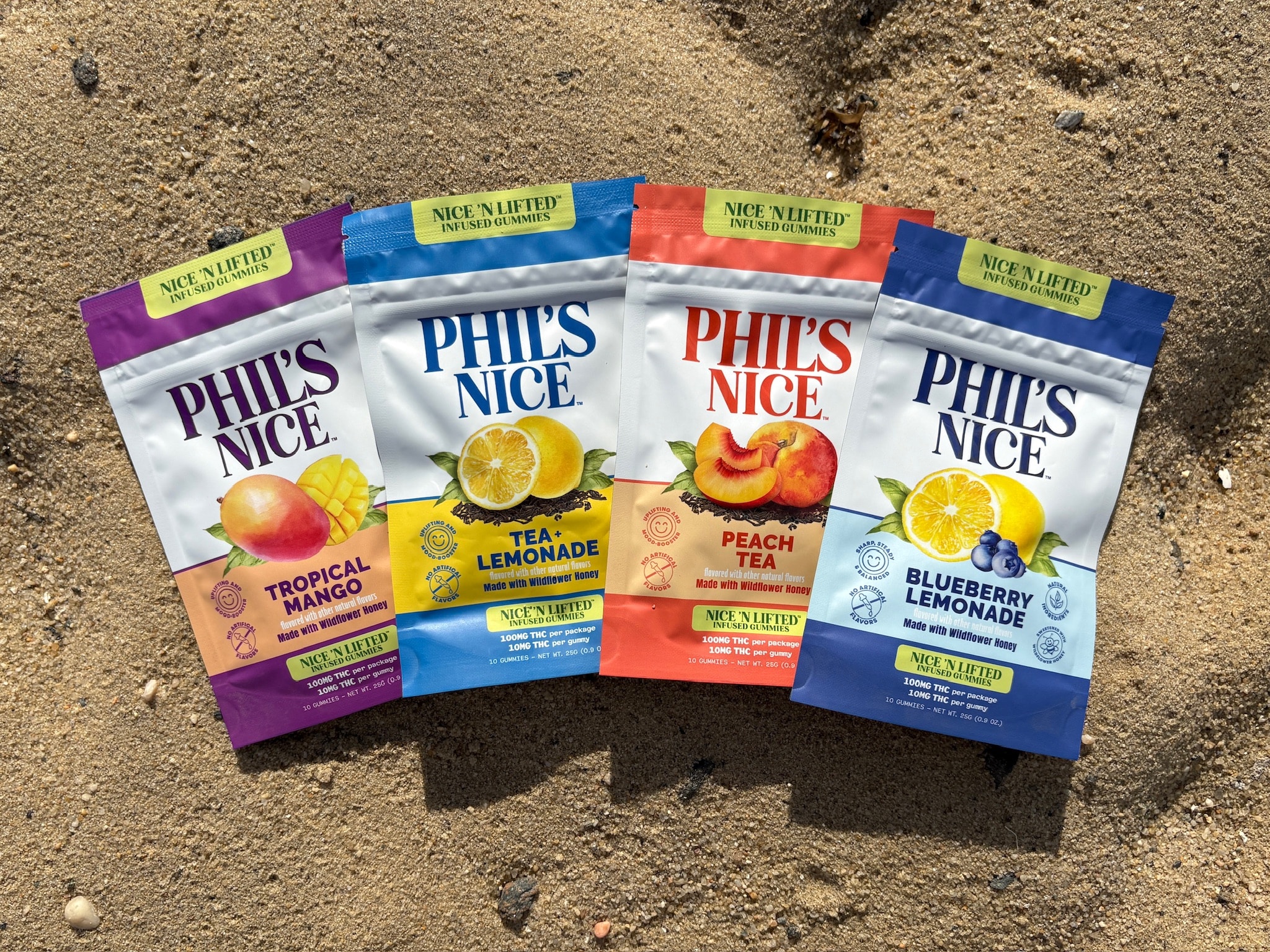
Take our Phil’s Nice lemonade-based gummies.
The bright citrus character people love isn’t just about flavoring. It’s rooted in the same natural citrus compounds that make lemons smell like lemons in the first place.
One of the biggest players is limonene, a terpene known for its unmistakable citrus aroma.
When someone opens a bag of Blueberry Lemonade or Tea & Lemonade gummies, that fresh citrus character is part of the experience from the very first moment.
We don’t stop there.
We work with cultivators who understand the importance of terpene-rich flower. Brands like Steady Habit have built a reputation for producing cannabis with bold aromas, complex flavor profiles, and the kind of terpene expression that makes consumers stop and say, “Okay, now that’s nice.”
Because at the end of the day, cannabis should be more than a THC percentage on a package.
It should smell amazing.
It should taste great.
It should be something you’re excited to share with your favorite people.
That’s always been the Phil’s Nice way.